Operations
What actually happens in the last 48 hours before an event
From the outside, an event begins when the doors open. For the people running it, the most important work happens in the two days before anyone arrives.
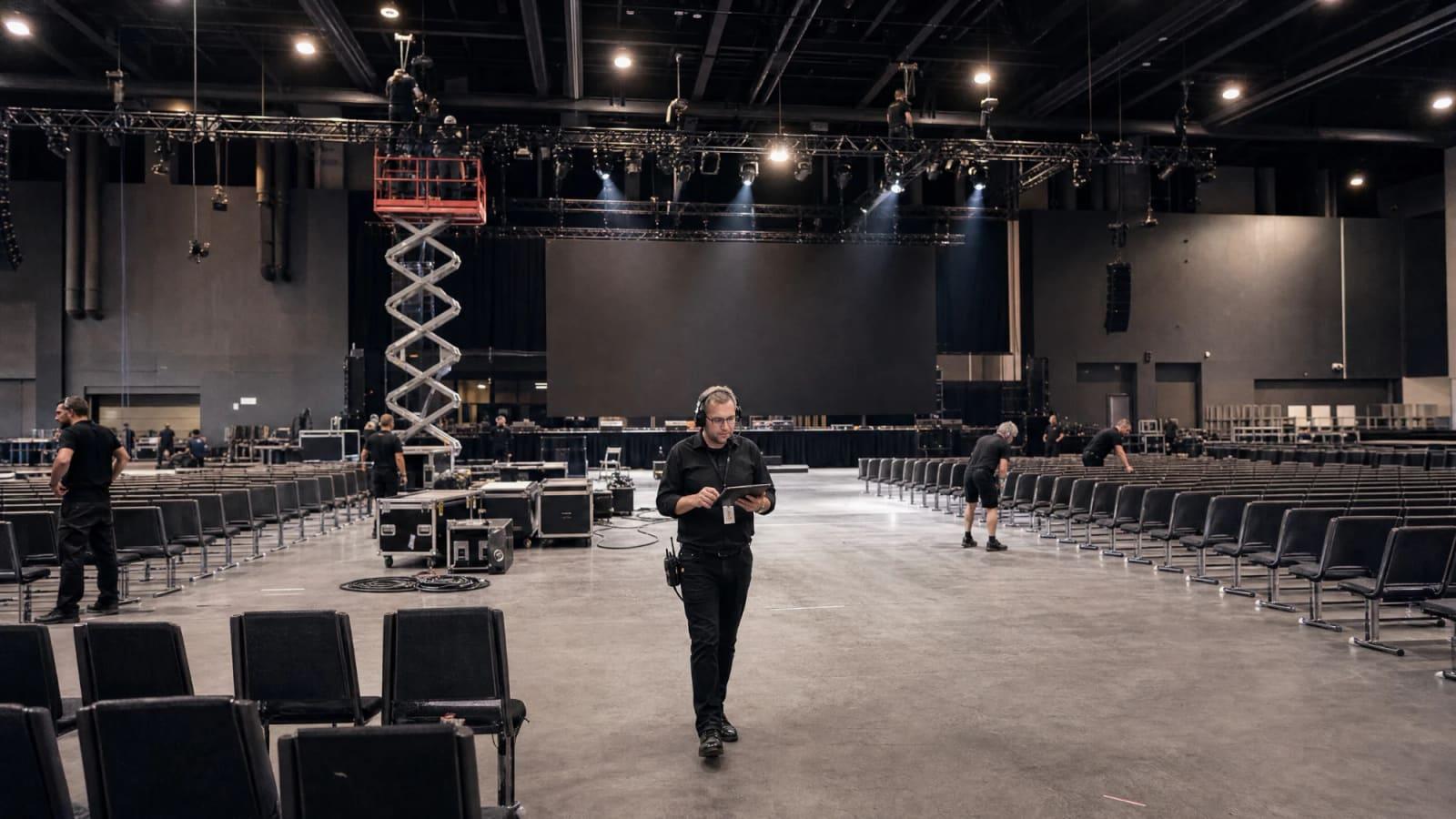
Attendees see an event at its best: the stage lit, the coffee ready, the badges waiting in neat rows. Very few of them see the forty-eight hours before that, when the plan meets the venue, the speakers meet their flights and every assumption made in the last six months is tested at once.
This is a rough account of those two days. Every event is different, but the shape is surprisingly consistent.
48 hours out: the programme stops being a plan
Two days before opening, the programme is supposed to be final. It almost never is.
A speaker’s flight has been cancelled. A minister’s office has asked to move a keynote by an hour. Two sessions have been merged because one moderator is ill. Each of these is a small change on its own. Together they touch the website, the app, the printed programme, the signage outside the rooms, the moderators’ briefing notes and the technical team’s running order.
The teams that get through this calmly have one thing in common: they change the programme once, in one place, and trust it to appear everywhere. The teams that struggle are updating four documents and hoping they did not miss the fifth.
This is also the last sensible moment to send attendees a useful message. Not a marketing email, but the practical one: where to register, what to bring, how to get to the venue and where to find the programme on their phone.
36 hours out: the venue becomes real
Setup begins and the floor plan starts to argue with reality.
A pillar sits where the registration desk was drawn. The meeting area is quieter than expected, which is good, but further from the main hall than anyone remembered, which is not. The room called “Hall C” in the programme is signed “Salon 3” by the venue. Someone has to decide which name wins and make sure it changes everywhere.
The technical team is running cables, testing screens and checking that the presentation laptop can actually reach the projector. Wi-Fi gets tested properly for the first time, ideally with more than three phones connected. If the event app needs a connection to work, this is when you find out how much connection there really is.
24 hours out: rehearsals and the speaker question
The day before is for rehearsals, and rehearsals are mostly about time. How long does it take to get a panel of four people on stage, microphones on, seated in the right order? What happens if the first slide does not load? Who gives the speaker a signal at five minutes, and do they know what the signal is?
Speakers arrive throughout the day with their own questions. Can they change their slides? Can the title of their talk be adjusted? Can their colleague join the panel? The honest answer is often yes, provided the change is made properly, in the system, rather than promised in a corridor and forgotten.
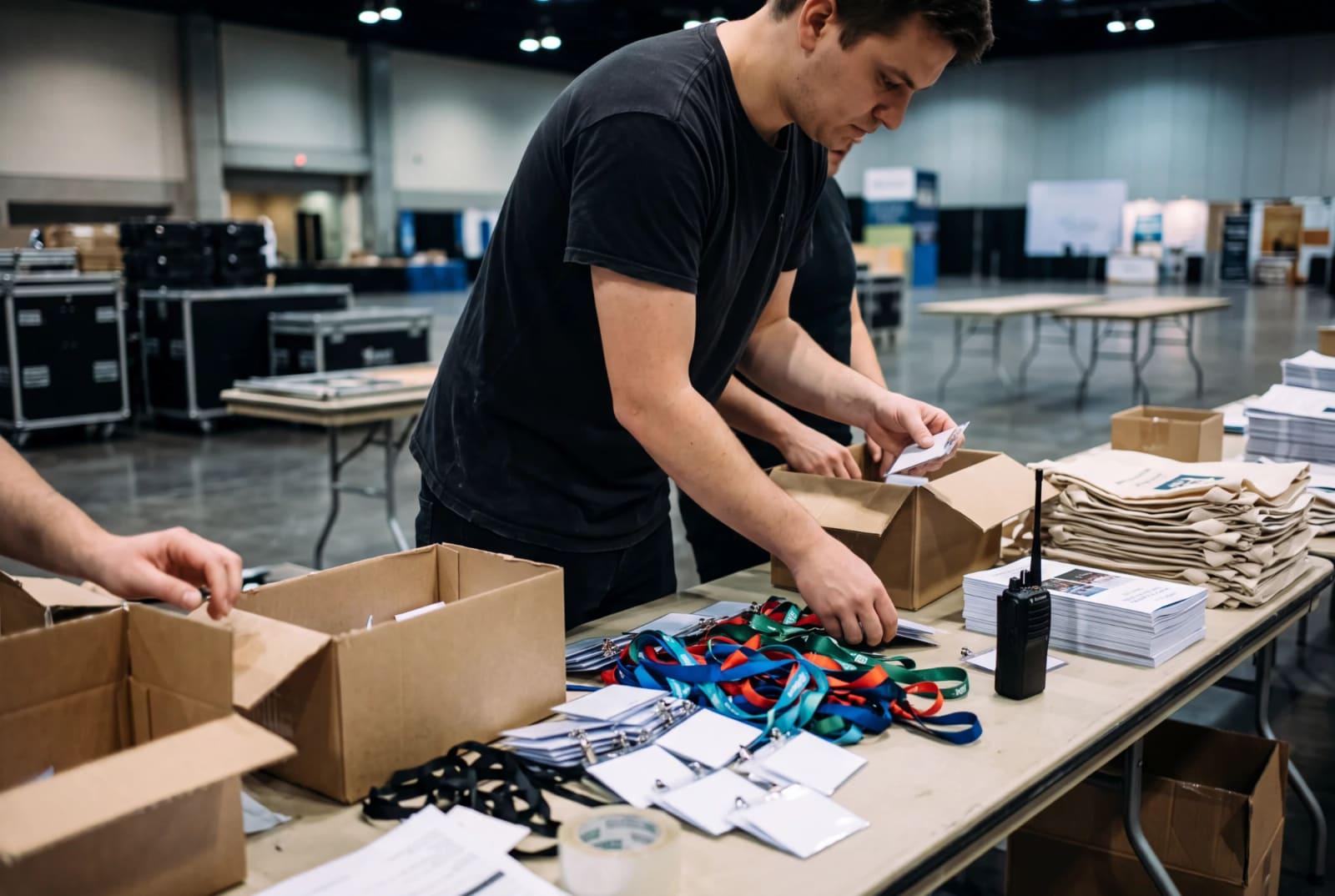
Badges are printed, checked and sorted. Someone finds the name that was spelled wrong. Someone else finds the delegation that registered under the organisation’s name instead of their own. The registration team rehearses too, because the first hour of an event is the one that sets its mood.
The night before: the quiet part
There is usually a moment, late on the last evening, when the hall is set, the screens are dark and the only sound is a technician packing cables. It is the closest thing an event team gets to calm.
It does not last long. This is also when the final changes arrive. A session runs long in rehearsal and has to be shortened. A sponsor asks for their logo on a screen it was never meant to be on. A speaker emails at eleven at night with a new slide deck, final version, really final this time.

The temptation is to handle these by message and memory. The better habit is to put every change through the same process as all the others, even at midnight, so that the morning team inherits the truth rather than a pile of chat threads.
6 hours out: the morning briefing
Early on opening day, the whole team meets for a briefing. It is short, specific and usually standing up.
Who is on the registration desk and who covers their break. Who has the radio for the main hall. What to say when an attendee asks for a session that has moved. Where the first aid point is. Which VIPs arrive when, and who meets them. What happens if the main stage loses power, which nobody expects and everyone should have thought about.
A good briefing also says who can make decisions. When something goes wrong in the next ten hours, people need to know whose answer counts, and they need to be able to reach that person quickly.
Doors open
Then the first attendees walk in, and most of the last two days becomes invisible.
That is the point. Nobody at the coffee station knows that the keynote was moved, that “Hall C” was nearly called “Salon 3” or that the registration desk was rebuilt around a pillar. They know whether they found their badge, whether the app told them the right room and whether the session started on time.
What makes the difference
After enough events, the pattern is clear. The last 48 hours are never quiet, so the goal is not to avoid changes. It is to absorb them without losing control:
- One source of truth. Programme, rooms and speakers live in one place, and every channel reads from it.
- A clear owner for every change. Someone decides, someone updates, and both know who the other is.
- Real testing in the real venue. Wi-Fi, screens and the app, with real content and enough devices.
- A practical message to attendees. Sent once, early enough to be useful.
- A short briefing and a clear chain of decisions. So the team spends opening day solving problems rather than asking who should.
The best compliment an event team can receive is that it all seemed effortless. Anyone who has spent the previous two days inside it knows exactly how much effort that took.